
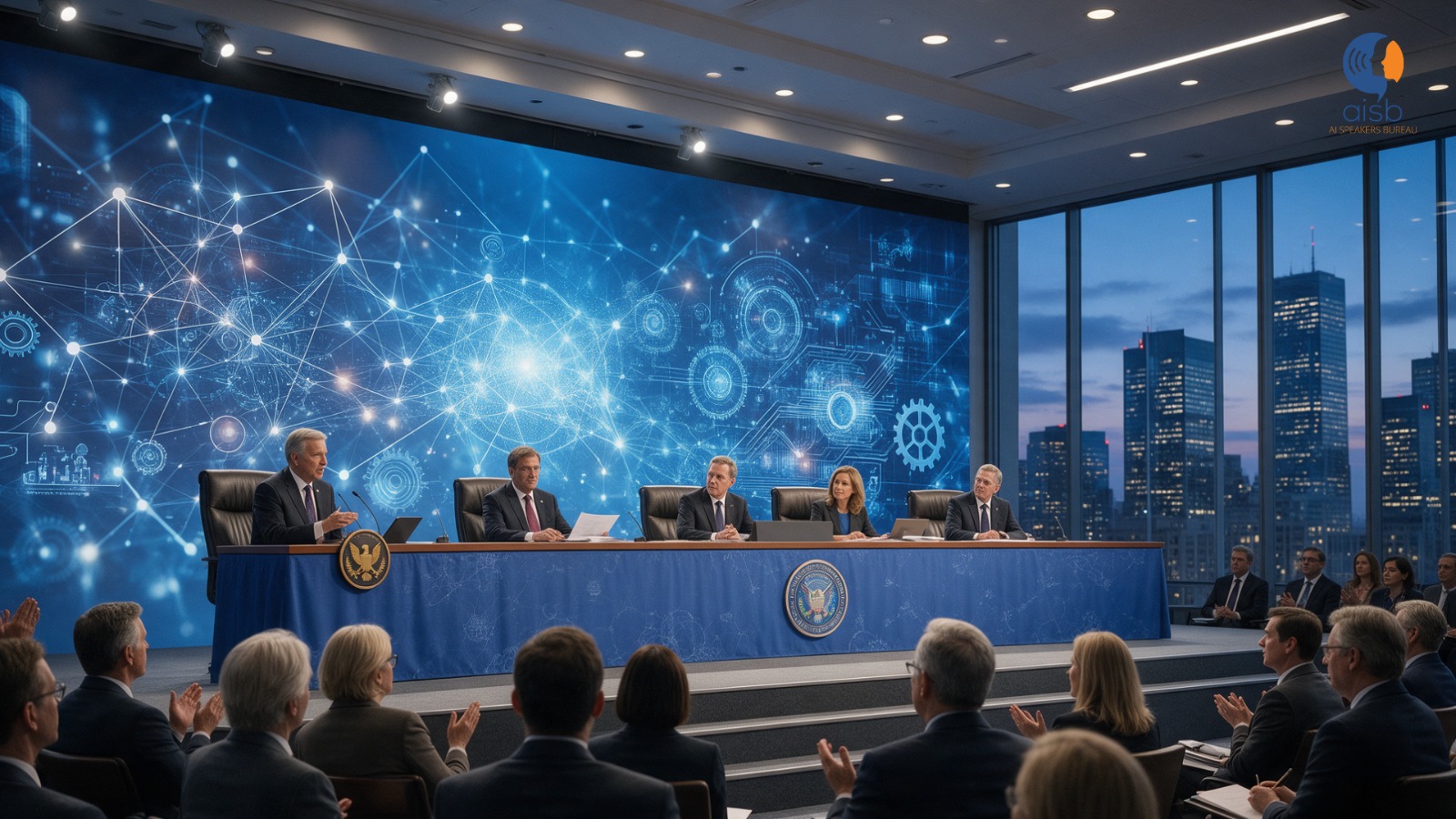
How to Choose an AI Policy Expert for a Government Summit or Regulatory Conference
The pace of change in artificial intelligence exceeds that of public law. It puts enormous strain on those responsible for coming up with policies that are both fair and innovative. The conference organizers require AI policy speakers to transform complicated tech ideas into actable strategies. Choosing the wrong speaker can confuse your audience. However, selecting the right person is key to taking your conference to the next level. The following is a guide on how to select the perfect speaker for your upcoming conference.
Define the Core Objectives of Your Summit
Before proceeding with any search for your speakers, ensure that you understand what you hope to accomplish from your conference. Is it about creating some laws or teaching civil servants? It will help you to identify the AI regulation experts who have the same goals as your organization. These include:
- National competitiveness, economic effect, and conformity with international safety standards.
- Measures for enforcement, risk management, privacy concerns, and liability.
- Implementation, trust in AI, ethical concerns, and procurement in governmental agencies.
These goals require certain expertise. You need to be familiar with your main goals before starting to work on them.
Look for Key Qualifications and Real-World Impact
Not all tech commentators understand the nuances of public administration. Consultants to governments, passed laws or regulations, or undertaken measures for public compliance are the right people to approach this subject.
These are the primary questions to ask when approaching prospective speakers:
- Experience with Government Agencies: Has the candidate appeared before a parliamentary committee? Have they advised regulatory agencies?
- Research or Policy Function:
Is the candidate involved in doing research work and creating policy papers on a consistent basis in journals that are peer reviewed? - Objectivity: Can they talk about technology and public safety without any bias?
- Working Together:
Are they capable of connecting private technology firms to public administration organizations?
Prefer AI policy keynote speakers who can prove their effectiveness through actions. All you want to avoid is a keynote speaker on AI policy who will give you nothing but theoretical comments.
Match the Speaker to Your Audience Demographic
Governments hold conferences with different people at different technical levels. A speech that is too technical will not interest policy analysts. While general overviews will let down the regulators. Great AI policy speakers know how to address each group according to the knowledge they have.
The target audience are the following groups:
- Political leaders and government ministers:
They require a strategic overview. Something that is politically aware and oriented towards security and development. - Government officials and regulators: They require focused discussion regarding testing and risk management.
- Public sector technicians:
They require information on the practical aspects of the implementation process.
Requesting past speeches of possible speakers can be a useful idea.
Key Topics Your AI Policy Expert Should Cover
The field of AI regulation is constantly changing. So, your expert will have to face real-world challenges. The most experienced AI governance experts focus on practical issues. These are topics that the government is currently facing.
Emerging Regulatory Frameworks
The expert you need should present information about the existing legislation as well as the new global regulations. He/She should simplify legislative frameworks to be implemented locally.
Ethical AI Deployment and Public Trust
Insufficient public trust is among the greatest challenges that are associated with the use of AI in the government. The issues of algorithmic bias, automation transparency, and data privacy should feature in your AI policy keynote speech.
Balancing Innovation with Safety
Sometimes, tough regulations might hold back the development of technology sectors in the area. AI regulation experts can help government officials find a right balance.
How to Vet and Select the Right Candidate
Identifying suitable candidates is just half the battle. You need to thoroughly vet them to make sure that they give you a great presentation.
Follow this plan:
- Watch their video recordings of previous speeches. Understand their tone, communication skills, and audience interaction.
- Meet their last organizers. It helps to know about their punctuality, efficiency, and professionalism.
- Discuss your goals on a call to understand how flexible they are.
Working with experienced tech policy speakers will definitely guarantee you a professional experience.
Looking forward to elevating your next government summit?
Connect With an AI Policy Expert Today and secure a world-class speaker for your event!
FAQs
1. What does an AI policy expert do?
An AI policy expert analyzes the societal impact of artificial intelligence. They even help governments create laws, regulations, and safety standards.
2. How do you choose an AI policy speaker for a government conference?
You choose an expert by evaluating their background in public administration. Moreover, review their past videos, and match their expertise to your audience’s goals.
3. What qualifications should AI regulation experts have?
They should possess experience advising public agencies in policy development. They must have also published research on tech law and have a strong track record.
4. What is the difference between AI policy and AI governance?
AI policy outlines high-level strategies, goals, and rules. While AI governance provides the operational frameworks and oversight mechanisms to enforce them.
5. Which AI regulation topics should government leaders discuss at a summit?
Leaders should focus on algorithmic transparency, data privacy rights, and cross-border compliance standards. This helps them balance innovation with risk management.
6. Why are technology policy speakers important for public-sector events?
They break down complex technical topics into practical recommendations. They even help public officials build effective, future-proof regulations.