
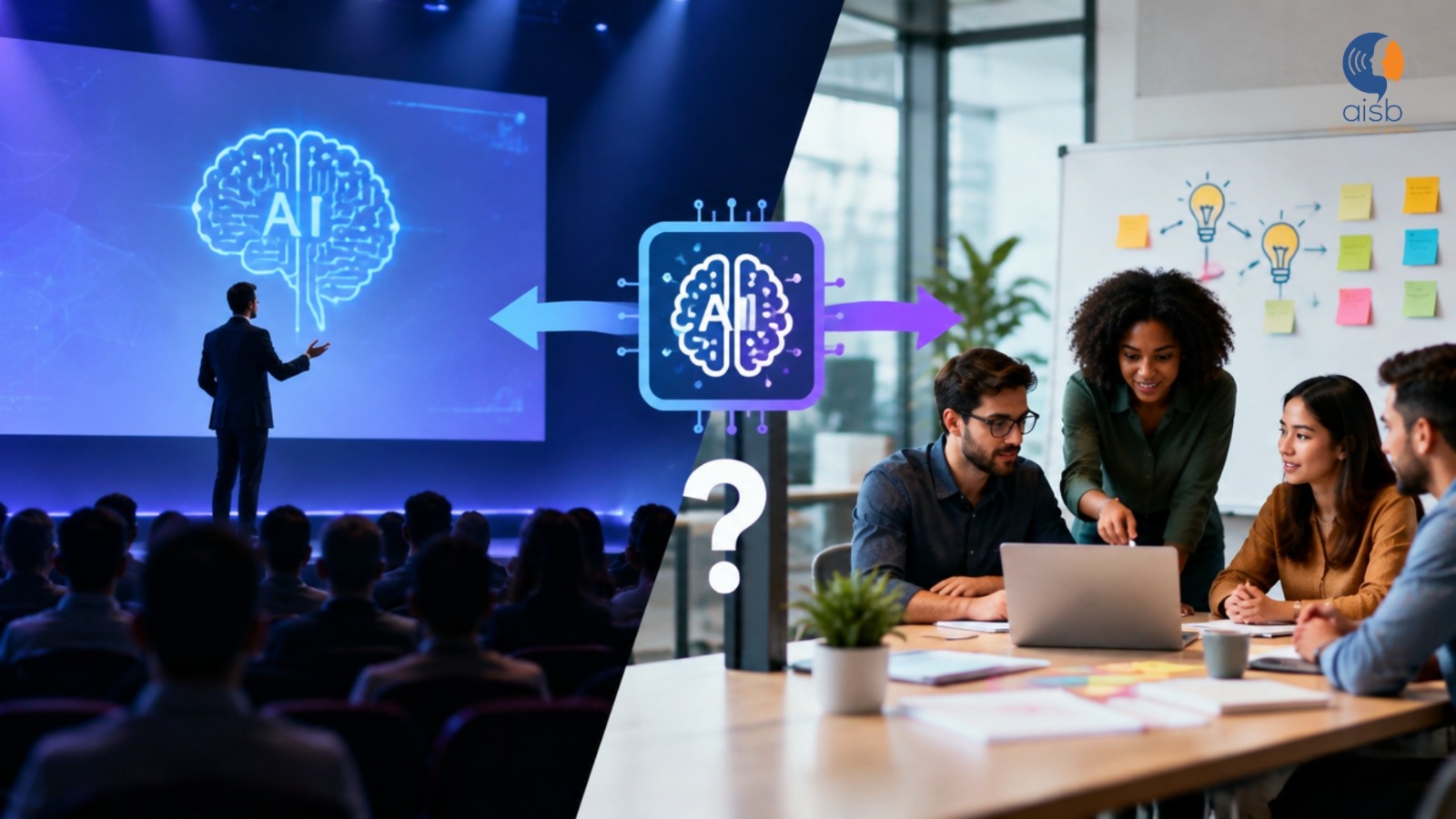
How Global AI Events Are Bringing Policymakers, Researchers, and Business Leaders Into the Same Conversation
AI advances at a lightning pace every week. New models are developed even before laws are drafted for them. Because of this speed, fragmented discussions can no longer solve complex problems. Today, premier AI events serve as vital crossroads for modern technological leadership. They gather key stakeholders in shared venues across the world. In earlier years, academic teams published research in isolated journals. Business executives built commercial software inside private corporate hubs. Lawmakers worked separately in national legislative chambers. Today, leading global AI conferences break down these stubborn institutional walls. They force these three distinct groups to debate critical issues directly.
Keynote stages highlight insights from renowned AI thought leaders each day. These luminaries explain complex computing models in clear, accessible language. Consequently, civil servants gain practical insights into neural network safety. Commercial leaders also discover how proposed rules might affect development budgets. Event organizers frequently partner with a professional AI speakers bureau today. These special agencies help the summit organizers identify machine learning experts. These agencies have an elite list of speakers. Thus, they ensure that the speakers are well-balanced in their perspectives and will make an impact.
Breaking Silos Across Tech, Law, and Enterprise
Businesses wish to implement scalable and automated solutions fast. But unassisted implementation of commercial systems poses many operational hazards. At today’s global AI conferences, business leaders have discussions with safety scientists. They assess algorithm bias alongside computational efficiency before releasing features. Responsible research requires proper commercial testing and funding. In AI policy events, researchers show the dangers of algorithms directly to business investors. Thus, businesses direct funds towards safer model alignment. Policymakers witness the demonstrations firsthand and use them in developing regulations.
Key Pillars of Cross-Sector Dialogue
- Scientific Rigor: Scientists here probe computational limits. At the same time, they discover problems in the models.
- Scale of Business: Companies invest, build infrastructure, and give feedback from consumers.
- Legislation: Governments create standards for public responsibility and protect consumer data rights.
AI thought leaders have set a very high bar for our industry. The keynote speeches focus on practical issues like copyright, labor, and privacy. The developers here are encouraged to put human well-being first. Their arguments shape executive strategy long after summits conclude. Securing balanced platform speakers requires strategic curation and domain expertise. A knowledgeable AI speakers bureau helps conference directors select objective technical voices. They identify speakers who bridge the divide between theoretical science and policy. This approach prevents stages from turning into simple corporate promotional showcases.
Transforming Theoretical Science Into Practical Public Policy
Labs in academia develop amazing prototypes at breakneck paces. Deployment within the industry without any measures poses serious social frictions. Modern global AI conferences turn academic studies into necessary measures to protect society. They provide interested parties an opportunity to openly negotiate about necessary safety standards.
Main Policy Issues on the International Level
- Data Governance: International guideline establishment concerning privacy of multimodal training datasets.
- Algorithmic Auditing: Assurance of fairness and security of model weights.
- Corporate Liability:
Definition of liability of companies in cases of economic damage caused by autonomous entities.
The participants gain insights from the AI thought leaders. The experts forecast regarding future technological developments and potential disruptions in the market. They encourage global organizations to standardize testing methods used. This way, the government can be prepared for the disruptive models to hit the market. Event organizers rely entirely on a professional AI speakers bureau for assistance. These placement firms discover pioneering voices across deep learning disciplines. They match experienced specialists with relevant policy panel sessions. This means that attendees get practical advice instead of mere talking points.
Forging Productive Cross-Border Collaborations
Governments do not have the power to manage frontier computing platforms entirely alone. Algorithms are transferred across borders in an instant due to cloud connectivity. International delegations meet at major global AI conferences to coordinate at a multilateral level. The discussions cover interoperable data standards that extend beyond territorial limits.
Critical Outcomes of Global Alignment
- Standards Interoperability:
Creation of mutual compliance protocols among separate sovereign markets around the globe. - Energy Management: Integration of clean energy solutions for growing supercomputer clusters.
- Resilience of Hardware:
Protection of vital semiconductor supply chains from the impacts of uncertain geopolitics.
The auditorium listens carefully as AI thought leaders analyze global supply chains. The thinkers speak to hardware shortages, semiconductor manufacture, and energy in data centers. Their evaluations guide both public energy policy and commercial data management. Quality panels require experienced experts of the subject matter and varied geographic perspectives. A highly rated AI speaker bureau sources experienced delegates from all tech hubs. The experts they suggest have years of experience explaining complex issues of computing with great lucidity. Therefore, the audiences get to engage in enriching conversations.
Find the Right Voice for Your Event. Connect with our dedicated booking team today to secure exceptional keynote voices.
FAQs
What are global AI events?
Global AI events focus specifically on AI. They bring together IT experts, business managers, government body regulators, etc. Participants discuss the latest tech, computational developments, dangers of machine learning, and international regulation.
Why are policymakers important at AI conferences?
The policymakers make the statutes, data regulations, and consumer safeguards. This guides the digital system. AI conferences enable them to get a grip on the realities of the situation before they start writing laws.
What topics are discussed at global AI conferences?
Global AI conferences discuss issues on various grounds. This includes model alignment, safety, algorithmic discrimination, and automation of data privacy. Their debates also include:
- Access to high-performance chips
- Effects of energy use on the environment
- Disruption to employment markets
- Liability issues
Why should AI events bring together researchers and business leaders?
Researchers invent revolutionary computer systems. Meanwhile, businessmen finance, promote, and implement them. The combination of both guarantees that any commercial software is based on sound science and is safe too. Such an approach speeds progress and minimizes errors.
How do AI policy events influence the future of AI?
AI policy events form common grounds for government officials, lawyers, and developers to set regulations. This joint effort sets up standards of auditing practices, disclosure models, and compliance guides on a global scale.
Where can organizations find AI speakers for global events?
Institutions can work with specialist AI speakers in order to find authoritative voices. Contact an event planner. And they will find accomplished speakers from scientific journals, academic faculties, and professional organizations within the industry.